Intervista inedita di Board Game Society a Vital Lacerda – Aprile 2022
Posso trovare ispirazione quasi ovunque. L’ispirazione non segue una regola scolpita nella pietra. Posso trovare un tema navigando su Internet, viaggiando, guardando un film, leggendo un libro ma anche durante il sonno o in bagno al mattino. Tutto potenzialmente può essere fonte di ispirazione
Vital Lacerda
Queste le domande raccolte dai soci di Board Game Society / Tana dei Goblin Milano che abbiamo posto a Vital Lacerda.
Un ringraziamento particolare a Nicola “Faso74” e Claudia “klaudette” per la realizzazione e la traduzione.
Ciao Vital, sono Alessandro Dipace, presidente della Board Game Society / Tana dei Goblin Milano.
Ogni mese stiamo facendo approfondimenti e retrospettive sui più grandi autori di giochi in scatola, Aprile è proprio il mese di VITAL LACERDA. Volevamo quindi sottoporti alcune domande che abbiamo raccolto tra i soci e che pubblicheremo sul nostro sito. Partiamo:
Dove trovi l’ispirazione per i tuoi giochi?
Posso trovare ispirazione quasi ovunque. L’ispirazione non segue una regola scolpita nella pietra. Posso trovare un tema interessante navigando su Internet, viaggiando, guardando un film, leggendo un libro ma anche durante il sonno o in bagno al mattino. Quindi non saprei: tutto potenzialmente può essere fonte di ispirazione.
La tua prima opera nota è stata la mappa del Portogallo di Age of Steam, è stato un approccio spontaneo da appassionato del gioco di Wallace o è un lavoro che ti è stato commissionato? Cosa volevi evidenziare nella mappa del tuo Paese rispetto al gioco base?
All’epoca stavo giocando molto ad Age of Steam, è stato naturale progettare una mappa di questo grande gioco esplorando il mio Paese. C’erano molte espansioni all’epoca ma non la mappa del Portogallo. Non era un lavoro su commissione perché non avevo mai progettato nessun gioco da tavolo. Era solo una mappa fatta in veste di fan del gioco. Non avrei mai pensato che sarebbe stato l’inizio di un cambiamento significativo nella mia vita.
Alcuni anni dopo, due anni fa, stavo riprogettando e pubblicando la stessa mappa per Railways of the World. È stato divertente ripensare a quell’inizio.
I tuoi giochi sono spesso basati su una solida astrazione della realtà, come Vinhos, Lisboa o Kanban. Ultimamente abbiamo visto i tuoi progetti orientarsi maggiormente verso la fantascienza con On Mars e con lo steampunk di Weather Machine. Quanto realismo ti piace includere nei tuoi giochi?
Per quanto possibile cerco di includere tanto realismo. Ma i miei giochi sono pur sempre eurogame e devono essere giocabili. Riguardo agli ultimi lavori, On Mars e Weather Machine, se ci pensi anche loro credo non saranno più fantascienza in un futuro molto prossimo. Ci sono infatti piani per colonizzare Marte e anche progetti sulla manipolazione del tempo, alcune sperimentazioni in questo ambito sono già state fatte nel secolo scorso.
A volte i tuoi giochi vengono criticati per essere “troppo pesanti”. Pensi che creare set di regole più semplici o più leggeri sminuirebbe i tuoi progetti?
Non ci pensato mai quando inizio a progettare un gioco, faccio quello che sento esser giusto. Cerco e cercherò di creare giochi a cui vorrò giocare una volta pronti, penso di riuscirci infatti gioco ancora con i miei amici a tutti i miei giochi. Negli anni penso di aver stabilito una sorta di tacito patto con il target di giocatori che amano i miei giochi e fare giochi pesanti penso sia ormai il mio marchio di fabbrica, giochi con strati di meccanismi collegati e intrecciati tra loro. Inizio sempre a pensare a un nuovo gioco con un tema che mi interessa, faccio molte ricerche e, se il tema rimane interessante, preparo un prototipo e inizio a testarlo.
Una mia curiosità è legata alla scelta del nome de personaggio ‘controllore’ in Kanban. Come mai hai deciso di chiamarla Sandra (che mi pare essere anche il nome di tua moglie)?
Sì, Sandra è mia moglie. Era solo il mio modo di omaggiarla, e inoltre, il suo nome è facile da pronunciare nella maggior parte delle lingue del mondo. Anche se lei non è per niente come la Sandra nella fabbrica. Ha anche fatto apparizioni in Escape Plan come detective e tornerà in un prossimo gioco basato su Kanban che si chiamerà Bot Factory.
In The Gallerist, tra le varie opere, appare anche una tua fotografia. E’ stato un lavoro estemporaneo o la fotografia è una tua passione?
Sì. La fotografia è una delle mie passioni e per un breve periodo della mia giovinezza sono stato un fotografo professionista. Ho fatto alcuni servizi fotografici di moda, lavorato per un giornale e fatto alcune mostre. Ho anche tenuto workshop di fotografia in bianco e nero. Avevo un laboratorio B&W a casa. Ma quello succedeva una vita fa.
La realizzazione di Lisboa è durata anni, l’uscita è stata rimandata più volte. Il ritardo è stato causato dal cambio di editore (da What’s Your Game? a Eagle-Griffin), dal fatto che sei particolarmente legato al progetto e hai voluto tirare fuori il meglio, oppure in fase di progettazione hai riscontrato aspetti che non funzionavano?
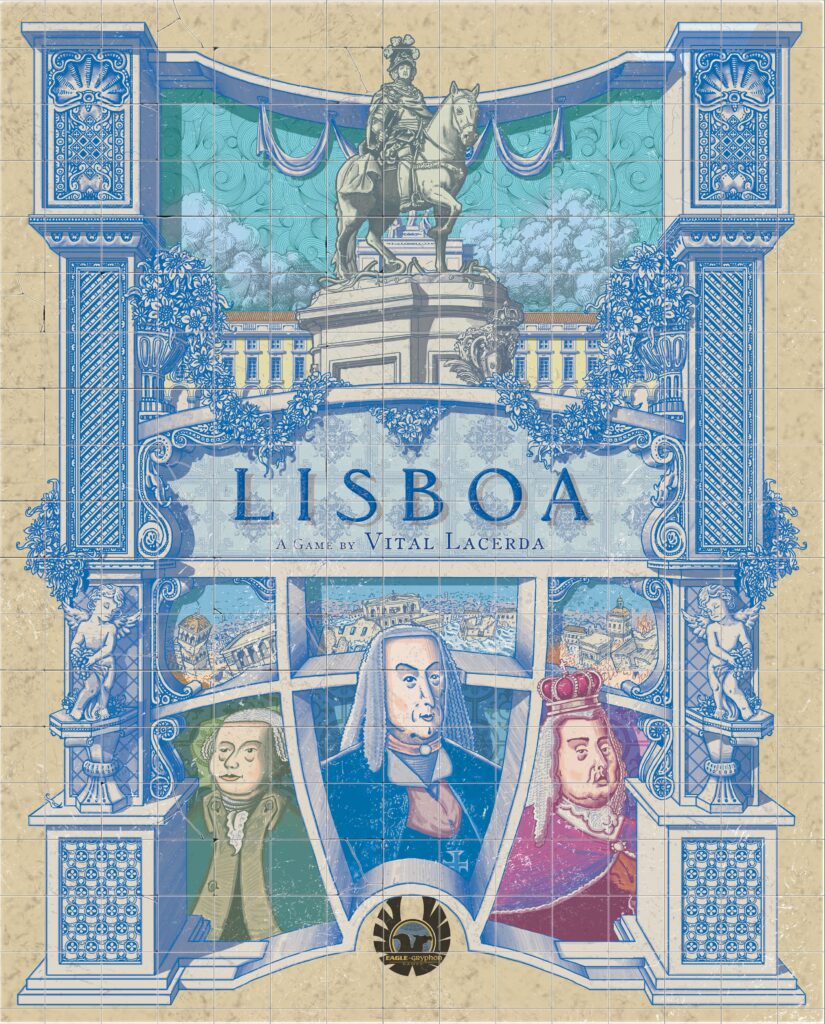
Lisboa era un progetto iniziato nel 2007. Ho disegnato la base del gioco, la mappa del centro di Lisbona, l’ho testata un paio di volte poi l’ho riposta nel cassetto per tirarla fuori più tardi, proprio come faccio di solito con tutti i miei progetti. Quel progetto è rimasto dimenticato per più di tre anni perché sapevo che aveva bisogno di più ricerche e stavo sviluppando altri lavori in quel momento. Poi l’ho ripreso e ho cominciato a finire il disegno originale. Lisboa non è mai stato un progetto presentato alla What’s Your Game?. È stato presentato subito alla Eagle-Gryphon Games. Il ritardo nella pubblicazione del gioco era fondamentalmente legato alla precisione. Volevo aggiungere più storia ai meccanismi di gioco, arricchire con gli eventi legati alle date che ho inserito nelle carte di gioco. Per far questo ho dovuto fare nuove ricerche, ci è voluto diverso tempo anche a causa della natura del gioco, è così pesante che necessitava di diversi playtest e a quei tempi non avevo accesso alle nuove piattaforme online che agevolano e accelerano il processo di progettazione. Prima si seguiva uno sviluppo più lungo e più arduo, era sempre necessario realizzare un prototipo per poi fare modifiche, stamparle, incollarle, allestirle e invitare i giocatori o attendere le convention. Al giorno d’oggi, Tabletopia è uno strumento indispensabile per il playtest di tutti i giochi.
Qualche anticipazione sul gioco Inventions: Evolution of Ideas. Puoi raccontarci aneddoti o curiosità particolari? Come è nato il progetto? Cosa ti ha convinto a costruirci sopra un gioco? Quale elemento ritieni particolarmente originale? C’è qualche rimpianto che hai vissuto durante lo sviluppo del gioco?
Sì, posso raccontarvi diverse cose. Il gioco è ancora in fase di sviluppo e riguarda una delle mie più grandi passioni: la tecnologia. Credo che uno dei fattori maggiormente determinanti nell’evoluzione dell’umanità sia stata la tecnologia. Gli esseri umani sono stati inventori e creatori dall’inizio dei tempi, questo ci rende diversi dagli altri animali. Inventions è un gioco dove i giocatori rappresentano civiltà fittizie che si sono diffuse nel mondo grazie alle varie scoperte tecnologiche dall’età della pietra. Troviamo nel gioco l’invenzione della ruota, i trasporti, la vela, ecc… fino agli sviluppi tecnologici più recenti. Il gioco è un piazzamento lavoratori in cui uno di questi (il Líder) non si sposta per un paio di turni bloccando un’azione finché non viene nuovamente spostato.
Nel gioco le carte rappresentano idee/scoperte che possono essere presentate, inventate e condivise con il mondo. Realizzando le diverse invenzioni si aiuterà la propria popolazione e la crescita della civiltà permettendo di costruire nuovi edifici nella Capitale e migliorando il potere delle varie azioni.
Le caratteristiche che trovo più piacevoli del gioco sono l’interazione tra i giocatori e la quasi totale assenza di risorse che sono rappresentate dai cittadini e dalle loro specializzazioni.
Nello sviluppo del gioco ci sono sempre molte risate quando alcune parti non funzionano o sono “rotte”! Una volta un giocatore ha trovato il modo di finire con quasi 300 punti in una partita che di solito attribuisce meno di 100. Alcuni mesi fa, alcuni tester, hanno pensato che il modo migliore per giocare fosse quello di fare qualsiasi mossa tranne un paio di azioni che invece io reputavo fondamentali, e hanno quasi vinto la partita. Una delle invenzioni del gioco che piace a tantissimi giocatori è la fermentazione alcolica, ci sono sempre molte risatine quando qualcuno la inventa. Questa invenzione al momento è ancora presente nel gioco.
Bot Factory, il thinky filler di Kanban, seguirà l’esperimento già testato con Mercado de Lisboa rispetto a Lisboa. Da dove nasce il desiderio di focalizzare un dettaglio di un gioco? Sei soddisfatto dell’accoglienza ricevuta da Mercado de Lisboa? Pensi di Bot Factory possa essere maggiormente apprezzato? C’è qualche cosa che vorresti dirci di più su Bot Factory?
Bot Factory è pronto e probabilmente avrà più successo di Mercado. Una delle maggiori critiche a Mercado è che il gioco è troppo breve per riuscire a pianificare una strategia. Bot Factory è un gioco un po’ più lungo, una partita in quattro giocatori dura circa 1 ora ed utilizza alcuni elementi di Kanban, come il meccanismo di posizionamento dei lavoratori, Sandra come manager e la stessa sequenza di eventi che solitamente piacciono tanto ai giocatori, inizialmente richiesi addirittura di chiamarlo mini Kanban.
Per questo progetto ho lavorato con un designer portoghese, João Quintela Martins, un mio amico. Quando ci troviamo giochiamo insieme e intanto suoniamo un po’ di musica. Abbiamo lavorato a stretto contatto, ci siamo incontrati, abbiamo suonato mentre lavoravamo, questo non avrei potuto farlo con Julian. Bot Factory è un gioco meno arido rispetto a Mercado e può essere facilmente giocato con famiglie e giocatori. È divertente vedere come alcuni giocatori impieghino diverso tempo per pianificare bene le loro mosse. Un’altra cosa buona di questo gioco è che dopo aver appreso Bot Factory sarà molto più facile imparare a giocare a Kanban. L’ho presentato alla convention (tenutasi il giorno prima dell’intervista – ndt) e ho ricevuto molti apprezzamenti. Eagle Gryphon Games lancerà Kickstarter a giugno. Spero ti piaccia.
Cosa ti porta a ripubblicare i tuoi giochi in versioni deluxe? E’ successo per Vinhos, CO₂ e Kanban. Per ognuno di loro si è resa necessaria una riedizione perché il gioco andava migliorato o è una tua mania di perfezionismo per affinare dettagli o semplicemente migliorare i materiali?
Puoi migliorare continuamente qualsiasi design. Potresti non pubblicare un gioco e lavorarci per tutta la vita migliorandolo continuamente senza aver mai finito. Ma il motivo principale delle nuove versioni dei giochi è che appartengono ad editori diversi e Eagle Gryphon voleva avere la sua versione una volta che le prime edizioni fossero esaurite. Io ho iniziato a lavorare con Ian durante The Gallerist e mi piace vedere la sua arte nei miei giochi, ho quindi deciso di offrire qualcosa di nuovo agli acquirenti e ho realizzato una versione semplificata di Vinhos, che si trova nell’edizione deluxe, una versione migliorata di Kanban e una versione cooperativa di CO₂.
I tuoi giochi sono indubbiamente tra i più curati e rifiniti per componentistica e materiali. Innegabile la tendenza a preferire il cartone (spesso di ottima fattura) e il legno al crescente utilizzo della plastica. A cosa è dovuta questa preferenza? E’ legata al green e sostenibilità, tematiche a cui hai dimostrato di esser vicino con giochi come CO₂? Ci racconti il tuo pensiero al riguardo?
L’ambiente è un problema globale a cui tengo tantissimo, mia figlia maggiore è anche una biologa, per questa ragione tendo a fare queste scelte. Inoltre mi piace il tocco del legno nei giochi da tavolo molto più della plastica. Sono un giocatore di eurogame dopo tutto.
Rimanendo sul tema della componentistica dei tuoi giochi è chiara la voglia di realizzarli indipendenti dalla lingua, costringendoti ad un’iconografia molto dettagliata che a volte è stata criticata (per Lisboa hai dovuto ideare un menù player aid per i giocatori). Come mai questa scelta?
Sono un grafico; credo anche che l’iconografia possa essere intuitiva e un linguaggio universale una volta ottenuta, ed è molto più economico da produrre quando devi stampare solo il regolamento e il player aid in molte lingue diverse e non tutto il gioco. Ciò consentirà all’editore di migliorare la produzione del gioco. Penso anche che renda il gioco più divertente e bello. Inoltre, non sono un fan dei giochi con un sacco di testo sul tabellone e carte.
L’ambiente è un problema globale a cui tengo tantissimo, per questa prediligo usare il legno e cartone alla plastica. Inoltre mi piace il tocco del legno nei giochi da tavolo. Sono un giocatore di euro, dopo tutto.
Vital Lacerda
Il tuo stile nel creare e produrre i giochi, “un numero contenuto di giochi, molto curati dove trasuda tutta la tua passione”, mi riporta alla mente un regista italiano: Sergio Leone, regista di un PUGNO di FILM, tutti realizzati con molta attenzione. Lo conosci? Ti ci puoi rivedere? Ti viene in mente un altro parallelismo per definire il tuo stile di autore?
Sono anche un appassionato di cinema e alcuni dei miei giochi sono ispirati ai film, come On Mars e Escape Plan.
Gli spaghetti-western non sono il mio genere preferito anche se apprezzo i film di Sergio Leone, in particolare C’era una volta in America. Amo anche la musica di Ennio Morricone, che è una parte importante dei suoi film. Ma sono un fan di alcuni registi che seguono i suoi passi e hanno Leone come grande ispirazione, ad esempio Quentin Tarantino.
Chiudiamo con delle domande fuori contesto per conoscerti meglio:
Autore di giochi (escluso te) o gioco preferito?
Per molto tempo è stato Martin Wallace. Il mio gioco preferito in assoluto è Brass Lancashire. I suoi giochi mi hanno fatto venire voglia di progettare giochi. Mi piacciono molti autori, da Feld, Gerdts e Suchý a Luciani, Tascini e Phister.
Musica o cantante/band preferita?
Molti, molti. Mi piacciono molti tipi diversi di musica. Provo a suonare il sassofono da solo.
Amo il rock alternativo, con musicisti come Nick Cave, Tom Waits, Radiohead, Portishead, Cat Power, fino al Blues e al Jazz con musicisti come Coltrane, Chet Baker, Dexter Gordon, Stan Getz.
Libro o scrittore preferito?
Wow, questa è una domanda difficile perché amo anche molti scrittori diversi. Da Milan Kundera, Kafka, Gabriel Garcia Marques a Edgar Allan Poe, Somerset Maugham e uno dei miei preferiti Philip K. Dick. Il mio libro preferito era probabilmente Il Richiamo della Foresta di Jack London. Per favore, non chiedermi perché. 🙂
Film o attore, regista preferito?
Anche in questo caso ce ne sono numerosi, ma probabilmente Tarantino e Ridley Scott sono i miei preferiti. Amo anche Kubrick, Lucas e Coppola.
Il film preferito è probabilmente Blade Runner o, più recentemente, Sorpavvisuto (The Martian). Ma amo anche molti, molti altri grandi. Whiplash, Il pianista e vecchi film come Paris Texas, The God Father, Scarface; Mi piacciono anche i film horror come Shining, The Others, House on the Hill e molti altri.
Sport preferito, squadra del cuore?
Sono un fan degli sport estremi; faccio kitesurf e snowboard e sono anche i miei sport preferiti. Mentre non ho una squadra preferita.
Grazie di tutto Vital!
Nessun problema, è stato un piacere. Best Vital
L’intervista originale:
Hi Vital, my name is Alessandro Dipace and I am the president of the Board Game Society (BGS) affiliated of Tana dei Goblin in Milan.
We have recently started a new initiative and dedicated each month to a great board game author. We propose their games during our weekly events including some demonstrations and discussions and, whenever it is possible, introduce the author with some information. April is dedicated to Vital Lacerda, therefore, we would very much appreciate if you could answer some questions we collected from the members of our association. We will, then, publish them in our website.
Where do you find the inspiration for your games?
I can find inspiration almost everywhere. It is not something that is mark stone. I can find a theme by looking at it on the Internet, traveling, watching a movie, reading a book, or during my sleep or morning bath. I don’t know; everything can be a precious source of inspiration.
Based on our knowledge, your first work was the map of Portugal for Age of Steam, was it the natural consequence of a great passion for the game by Wallace or was it commissioned? What was the main purpose of the map, was there something you wanted to highlight in the map of your country respect to the basic game?
I want to have both. I was playing a lot of Age of Steam at the time, and it seemed natural to be to design a map of the great game with my country on it. There were plenty of expansions at the time but not the Portugal map. It was not a commissioned work because I had never designed any board game. It was just a fan-based map for the game. I never thought that would be the beginning of a significant change in my life.
A few years later, two years ago, I was re-designing and publishing the same map for Railways of the World. It was a fun thing to remember.
Your games are often grounded on a solid abstractification of reality, such as Vinhos, Lisboa or Kanban. Lately we have seen your designs becoming more oriented towards sci-fi, with On Mars, and steampunk and Weather Machine. How much realism do you like to include in your games?
As much as possible. But they are still euro games, and they must be playable. About my last games, On Mars and Weather Machine, if you think a bit, I believe that they will not be sci-fi anymore very near future. There are plans to colonize Mars in the following decades, and on weather manipulation, a few experiences about wee already done in the last and this century.
Sometimes your games are criticized for being “too complex”. Do you think that making simpler or lighter rulesets would detract from your designs?
I never thought about that when I started designing a game. I always do what I feel is right for me. I will always try to make games that I will play after they are ready, and I think I’m achieving it because I still play all my games with my friends. And during the last years, I think I have already established a target with players that want the same as me. Heavy games with some of them behind and something that I think it’s my trademark right now that are layers of connected and interwoven mechanisms. I always start my games with a theme that interests me, I do a lot of research, and if the theme keeps interesting, I go for a prototype and start playtesting it.
One of my curiosity is related to the name of the controller in Kanban. How come that this is Sandra, which, if I am not wrong, is your wife’s name?
Yes, Sandra is my wife. It was just my way to homage her, and besides, her name is easy to pronounce in most languages around the world. But she is nothing like Sandra at the factory. She also made appearances on Escape Plan as a detective and now on a future game based on Kanban called Bot Factory.
In The Gallerist, among the pieces of art, there is also one of your pictures. Was it an impromptu work or photography is one of your passions?
Yes. It’s one of my passions, and during a short time in my youth, I was a professional photographer. I did a few fashion photoshoots, worked for a newspaper, and did a few exhibits. I also taught some black and white photography workshops. I had a B&W lab at home. That was another life.
Lisboa took several years to be completed and the release was postponed a few times. The delay was due to the change of the editor (formerly WYG an then Eagle-Griffin), your affection to the project and, thus, the desire to make the best of it or during the design phase you have found aspects that required to be fixed?
Lisboa was a project that started in 2007, and then. I designed the base of the game, the map of downtown Lisbon playtested it a few times, and then sent it to the shelf to pick it up later, just as I usually do with all my projects. But that one remained forgotten for more than three years because I knew it needed more research, and I was developing other projects simultaneously. Then I pick it up again and start finishing the design. Lisboa was never a project presented to What’s Your Game. It was just introduced to Eagle-Gryphon Games. Most of the delay to the game was basically due to the accuracy. I want to add more history to the game mechanisms and all the dates of the events that I write on the cards. For that, I need an lt moe research. It also took longer due to the nature of those types of games. They are so heavy that they need a lot of playtesting, and not having access to the new online platforms to work helps a lot to speed up the process of designing; it was a more prolonged and more arduous process. It would be necessary to make changes, print them, glue them, set them up with people to play, or wait for conventions. Nowadays, Tabletopia is an indispensable tool to playtest more than all games.
Can you share some preview on the game Inventions: Evolution of Ideas. Can you tell us some anecdotes or curiosity? Where does the project originated from? What inspired you to conceive the game? What is the most peculiar element in it? Have you any regret related to the development of the game?
Yes, I can. The game is still in development but is about one of my most significant interests and passions: technology. I believe that one of the most critical factors in the evolution of humankind was technology. And humans have been inventors and creators from the beginning of time. That is what makes us different from other animals. Inventions is a game about it. Players represent fictitious civilizations that have grown and spread into the world through technologies since the Stone Age and the creation of the wheel, transportation, sailing, etc., to nowadays. It’s a worker placement game where one of your workers (the Líder) never leaves the board and blocks one action during a couple of rounds until it moves again.
In the game, cards represent ideas that can be presented, invented, and shared with the world. Doing it increases your civilization population and knowledge, allowing you to build new buildings in your Capital City, improving the power of your actions.
To me, some of the most likable characteristics of the game are the interaction between players and the use of almost no resources; they are represented by your citizens and their specializations.
There are always many laughs when some parts of the game don’t work or are utterly broken. Once a player found a way to finishing with almost 300 points in a game that usually scores less than 100. A few months ago, some playtesters decided that the best way to play the game was doing anything else but a couple of the actions in the game, and they almost won the game. One of the inventions of the game is the favorite of many players. That is the Alcohol Fermentation. There are always giggles when someone invents it. It is still in the game.
Bot Factory, the thinky filler of Kanban, will follow the experiment already done with Mercado de Lisboa respect to Lisboa. Where does the desire to focus one detail of a game come from? Are you happy about the response to Mercado de Lisboa? Do you think Bot Factory could achieve a greater success? Is there anything about Bot Factory that you would like to share with us?

Bot Factory is ready, and it probably will have a bit more success than Mercado. One of the biggest criticisms of Mercado is that the game is too short to plan a strategy. Bot Factory is a longer game. It takes about 1 hour to play with four players. It uses a few elements of Kanban, like the worker placement mechanism, Sandra as a manager, and the same sequence of events that players like so much. I would risk calling it a mini Kanban. I also worked with a Portuguese designer, João Quintela Martins, a friend of mine. We play board games and music together. So we worked closely and met and played—something I couldn’t do with Julian. Bot Factory is a much less dryer game than Mercado, and it can be easily played with families and gamers. It is fun that gamers take longer to play because they plan further on their moves. A good thing with this game is that after you learn Bot Factory will be much easier to pick up and learn how to play Kanban. Been playing the game at conventions, and it seems it is very well accepted. Eagle Gryphon Games will launch the Kickstarter in June. I hope you enjoy it.
Why do you often republish your game in a deluxe version, as done for Vinhos, CO₂ e Kanban? Did you think some improvements were required or because you are such a perfectionist who want to enhance the details or the materials?
You can continually improve any design. If you don’t want to publish, you may work on a design all your life. It’s never finished work. But the main reason for the new versions of the games was because they belong to different publishers, and Eagle Gryphon wanted to have their version after the first editions sold out. I also start working with Ian during the Gallerist, and I want to revise the art in all those games. I decided then to offer something new to the new buyers and made a simplified version of Vinhos that is on the box of the latest edition, an improved version of Kanban, and a Coop version of CO₂.
11 – Your games are undeniably among the most refined and finely finished games considering the components and materials. The preference of, usually excellent, cardboard and wood over the much more common plastic is due to environmentally friendly reasons – a matter you have shown interest about with your game CO₂ – or other reasons?
The environment is one of the reasons that is a problem I care about immensely; my oldest daughter is a biologist. But I like the touch of the wood in board games a lot more than the plastic. I’m a euro gamer, after all.
Talking about the components of your games, it is clear you wish something independent from the language at the expenses of a very detailed iconography, which has been sometimes criticised (in Lisboa you had to create a player aid menu), what is the rationale behind it?
I’m a graphic designer; I also believe that iconography can be intuitive and a universal language once you get it, and it is much cheaper to produce when you have to print just the rulebook, and the player aids in many different languages. So that will allow the publisher to improve the production of the game. I also think it makes the game more fun and beautiful. Besides, I’m not a fan of games with a ton of text on the board and cards.
Your style, based on a reduced number of very accurately designed and made games in which your passion is tangible, remind me an Italian film director, Sergio Leone, who directed a FISTFUL of FILMS  all done with great attention. Do you know him? Can you see something similar between the two of you? Have you ever thought of another possible parallelism with your author style?
I’m also a cinema buff, and some of my games are inspired by movies, like On Mrs and Escape Plan.
Western Spaghetti is not my type of movie, but I love the work of Sergio Leone in Once Upon a Time in America. I also love Ennio Morricone’s music, which is a big part of his movies. But I’m a fan of some directors that follow his steps and have Leone as a big inspiration, like Tarantino.
Finally, we would like to conclude with some more personal questions to know better Vital and not only the famous author.
Which is your favorite game author and game?
For a long time was Martin Wallace. My favorite game ever is Brass Lancashire. His games made me want to design games. I like plenty of authors, from Feld, Gerdts, and Suchý to Luciani, Tascini, and Phister.
Your favorite music and singer?
Many, many. I like a lot of different types of music. I try to play the saxophone myself.
I love alternative rock, with musicians like Nick Cave, Tom Waits, Radiohead, Portishead, Cat Power, to Blues and Jazz with musicians like Coltrane, Chet Baker, Dexter Gordon, Stan Getz.
The best book you have read?
wow, that is a difficult question because I love a lot of different writers too. From Milan Kundera, Kafka, Gabriel Garcia Marques to Edgar Allan Poe, Somerset Maugham, and one of my favorites Philip K. Dick. My favorite book was probably The Call of the Wild by Jack London. Please don’t ask me why. 🙂
Your preferred movie, actor and director?
Again, there are numerous, but probably Tarantino and Ridley Scott are my favorite. I also love Kubrick, Lucas, and Coppola.
The movies are probably Blade Runner or, more recently, The Martian. But I also love many, many other great ones. The Whiplash, The Pianist, and old movies like Paris Texas, The God Father, Scarface; I also like horror movies like The Shining, the others, The House of the Hill, and many others.
Which is your favorite sport and are you fan of any team?
I’m a fan of extreme sports; I kitesurf and snowboard. I think those are my favorites; I don’t have a team.
Thank you so much for your time, we really appreciate it.
No problem, it was a pleasure. Best Vital