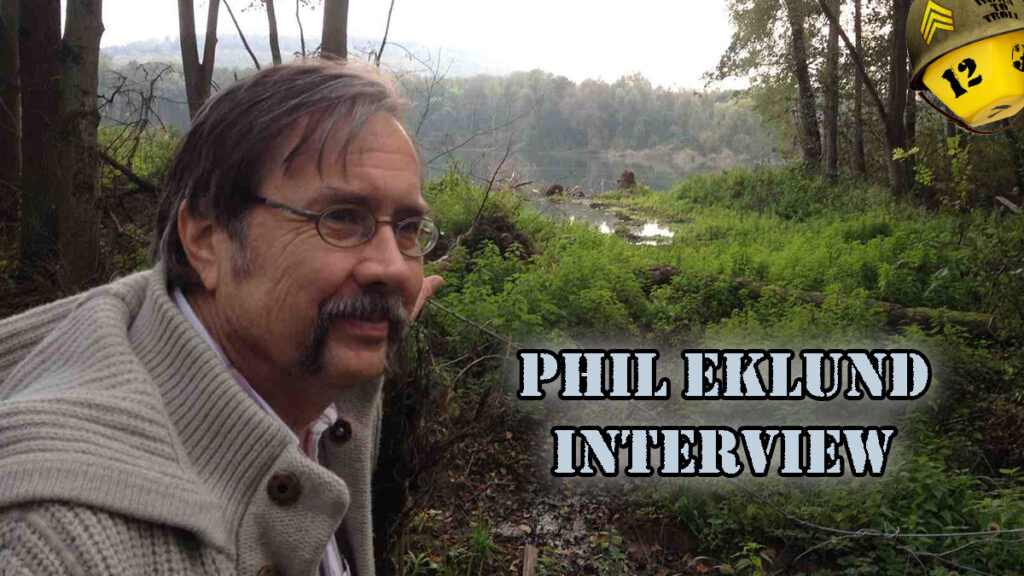
Intervista inedita di Board Game Society a Phil Eklund – Marzo 2022
“l’aspetto educativo e didattico dei miei giochi è secondo solo alle parti immersivie di storytelling”
Queste le domande raccolte dai soci di Board Game Society – Tana dei Goblin Milano che abbiamo posto a Phil Eklund e alle quali, con una disponibilità e velocità impressionante, ci ha risposto..
Un ringraziamento particolare ad Andrea “Ajarok” Vaccaro per la realizzazione dell’intervista e degli approfondimenti. Abbiamo riportato il tutto in originale e sotto tradotto in italiano.
1. You games are based on a very delicate balance between game mechanics and simulation. How can you achieve that complex balance between the concept and the playability?
I start with a subject that is important and interests me, list all the aspects that I really want to simulate, experiment to find the best possible simulation mechanic for each, and finally strip it down until it is playable.
2. Which one of your games is the most satisfactory to you?
They’re not my favorites, but the games that were the most satisfying in terms of recreating reality are the related games Bios: Megafauna and Bios: Mesofauna.
3. You collaborated often with other game designers: what do you look for in those collaborations and what contribution do they offer to you?
I am a sucker for passion and comprehensive thoroughness, and a shared respect for discovering something about the universe through games.
4. Many of your games, above all the Pax series, get ideas from historical epochs or key periods of the human history. Which different period you’d like to explore for a new game?
There are so many possibilities, I have attempted (and failed) to simulate the founding of the USA. Maybe I will try again.
5. Which one of the published games you wished to be one of your creations?
Indonesia comes to mind.
6. How important is for you the educational part in a game?
This part is second only to immersion and story-telling.
7. In 2013 Greg Costikyan published the book Uncertainty in games. In Bios series, randomness becomes progressively easily managed (very hard to control in Genesis, while in High Frontier his effect is minimal). What you think about uncertainty in games? How much it is important?
It is important in a simulation to distinguish between what is reasonably within player control (so uncertainty is minimal) and what is not (large uncertainty). In the Bios Series, Life takes increasing control over its own environment, so there is a lot of wristage in the game about life‘s origins (Bios: Genenis), decreasing wristage to High Frontier, about the conquest of space in which you can play conservatively without rolling the dice once.
8. Which books have influenced you the most?
Authors who are free thinkers not afraid to think outside the box have impressed me the most, even if I disagree with them. Origins of Consciousness in the Breakdown of the Bicameral Mind, by Jaynes, and the Logical Leap by Harriman are examples.
9. Where do you buy your hats? Would they be a good stretching goal for the next Kickstarters? 🙂
I buy my hats at the annual Tucson Gem and Mineral Show.
10. And the last obvious question: any spoiler on your next games?
I am working on a wargame about Zeppelins, called Zeppelin Commander, a theme I have experimented with for a long time.
- I suoi giochi si basano su un sottile equilibrio tra simulazione e meccaniche di gioco. Come riesce a ottenere tale bilanciamento tra concept e giocabilità?
Parto da un soggetto cha ha una sua importanza e che m’interessa, elenco tutti gli aspetti che voglio riprodurre, faccio delle prove per trovare le miglior meccaniche di simulazione possibili, ed infine elimino il superfluo sino a quando la simulazione diventa giocabile.
2. Tra i suoi giochi, qual è quello di cui è maggiormente soddisfatto?
Non sono forse i miei “preferiti”, ma i giochi che più mi hanno soddisfatto come simulazione della realtà sono due giochi legati tra loro, Bios: Megafauna e Bios: Mesofauna.
3. Molti dei suoi giochi nascono dalla collaborazione con altri game designer: cosa cerca in queste collaborazione e che apporto danno?
Due punti fondamentali sono la passione e una meticolosità scrupolosa, e un’idea condivisa di come sia possibile scoprire qualcosa sull’universo attraverso i giochi.
4. Gran parte dei suoi giochi, in particolare la serie Pax, prendono spunto da precisi periodi o momenti chiave della storia. Quale altro periodo o momento storico la stimolerebbe di più per un nuovo gioco?
Le opzioni sono diverse: ho già provato in passato (senza successo) a simulare la nascita degli Stai Uniti d’America. Forse mi concederò un’altra possibilità.
5. Quale gioco pubblicato avrebbe voluto creare lei?
Mi viene in mente Indonesia.
6. Quanto è importante per lei la parte educativa e didattica in un gioco?
È seconda solamente all’esperienza immersiva e allo storytelling.
7. Nel 2013 Greg Costikyan ha pubblicato il saggio Uncertainty in games*: nei suoi giochi, quanto pensa che l’incertezza sia una componente fondamentale nei giochi? Nella serie Bios, il fattore casuale man mano che l’evoluzione procede diventa sempre più controllabile (difficilmente controllabile in Genesis sino a High Frontier, dove l’incidenza è minima). Cosa ne pensa dell’incertezza nei giochi?
In una simulazione è importante distinguere ciò che è ragionevolmente sotto controllo da parte di un giocatore (in modo che l’incertezza sia minima) e ciò che non lo è (e qui invece l’incertezza è grande). Nella serie Bios, la Vita acquista man mano sempre più controllo sull’ambiente circostante, e così il wristage** è molto presente all’origine della vita (Bios: Genesis) e va man mano diminuendo sino ad arrivare a High Frontier, con la conquista dello spazio in cui è possibile giocare in maniera conservativa senza mai dover tirare il dado neanche una volta.
8. Quali libri hanno maggiormente influenzato il suo pensiero?
Gli autori che più mi hanno colpito sono i liberi pensatori, persone che non hanno paura a uscire dagli schemi e dal seminato, anche quando non sono d’accordo con loro. Due ottimi esempi possono essere The Origin of Consciousness in the Breakdown of the Bicameral Mind, di Julian Jaynes (Il crollo della mente bicamerale e l’origine della coscienza, Adelphi 1996), e Logical Leap di David Harriman.
9. Dove compra i cappelli? Potrebbero essere degli stretching goal per i prossimi Kickstarter? 🙂
All’annuale ritrovo al Tucson Gem and Mineral Show.
10. Domanda finale di rito: progetti futuri?
Sto lavorando a un wargame sugli Zeppelin, intitolato Zeppelin Commander, un tema di cui mi sto occupando da molto tempo.
* in uscita ad aprile anche in lingua italiana, Greg Costikyan, L’incertezza nei giochi, Hypnos, 2022.
** il lancio contemporaneo di un gran numero di dadi.